
 Peter Smith
⬤Federal Reserve Chair Jay Powell dropped a bombshell during his latest press conference—artificial intelligence isn't just a future concern anymore, it's already pushing unemployment higher right now. Powell made this admission while announcing the Fed's second interest rate cut in two months, pointing to clear signs that the labor market is losing steam. What's catching everyone's attention is that AI-related job losses are happening even though traditional employment metrics haven't caught up yet to show the full picture of what's really going on.
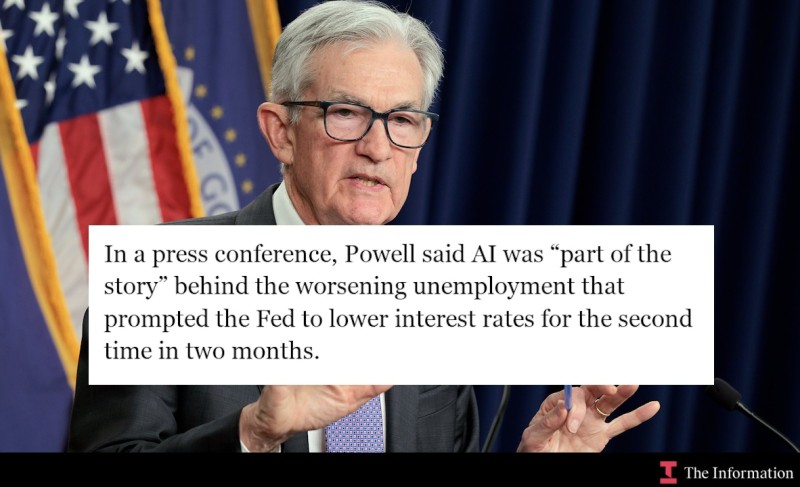
⬤Powell was careful to note that conventional indicators like weekly jobless claims aren't screaming alarm bells about AI just yet. But dig a little deeper, and the cracks are starting to show in jobs where AI tools are being adopted most aggressively. Software engineers and tech workers are feeling the squeeze first—hiring has slowed down noticeably, and layoffs are becoming more common in these fields. It's a clear sign that AI is reshaping what companies need from their workforce before the broader economic data fully reflects these shifts.
⬤Here's where things get really interesting: Powell warned that this AI wave could hit harder and spread wider than any previous technological disruption we've seen. Unlike past automation that mostly affected factory floors and repetitive tasks, AI is going after white-collar and knowledge-based positions across the board. This broader reach is exactly why it's tougher to spot early using the usual economic measuring sticks, and why it could catch policymakers off guard if they're not paying close attention.
⬤The bottom line? The Fed is now officially factoring AI disruption into its thinking about jobs and interest rates. Powell's acknowledgment that AI is contributing to employment weakness could shift expectations around future rate cuts and reshape how investors view economic growth ahead. As more companies jump on the AI bandwagon, watching how this plays out in the job market—and how the Fed responds—is going to be crucial for understanding where the U.S. economy heads next.
 Peter Smith



