
 Peter Smith
OpenAI's latest Codex-CLI release represents a meaningful evolution in how developers interact with AI directly from the terminal. Version 0.52 shifts focus toward practical usability improvements, better image handling, and tighter system integration—positioning the tool as more than just an interface, but as a genuine AI development companion.
A More Polished, Intuitive Experience
Trader Mark Kretschmann recently highlighted the Codex-CLI 0.52 release, drawing attention to OpenAI's substantial refinements to the text-user interface. Messages now queue properly during live streaming, giving developers better visibility when processing lengthy outputs.
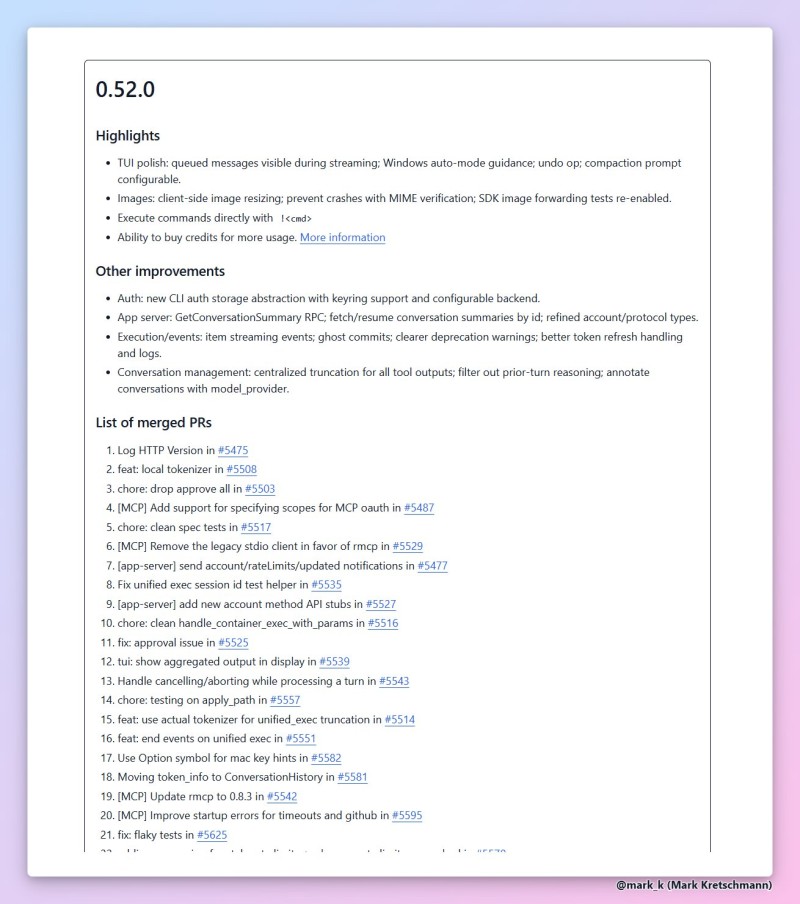
Windows users benefit from new auto-mode guidance, while undo functionality and configurable prompt compaction help keep revision cycles smoother and logs cleaner.
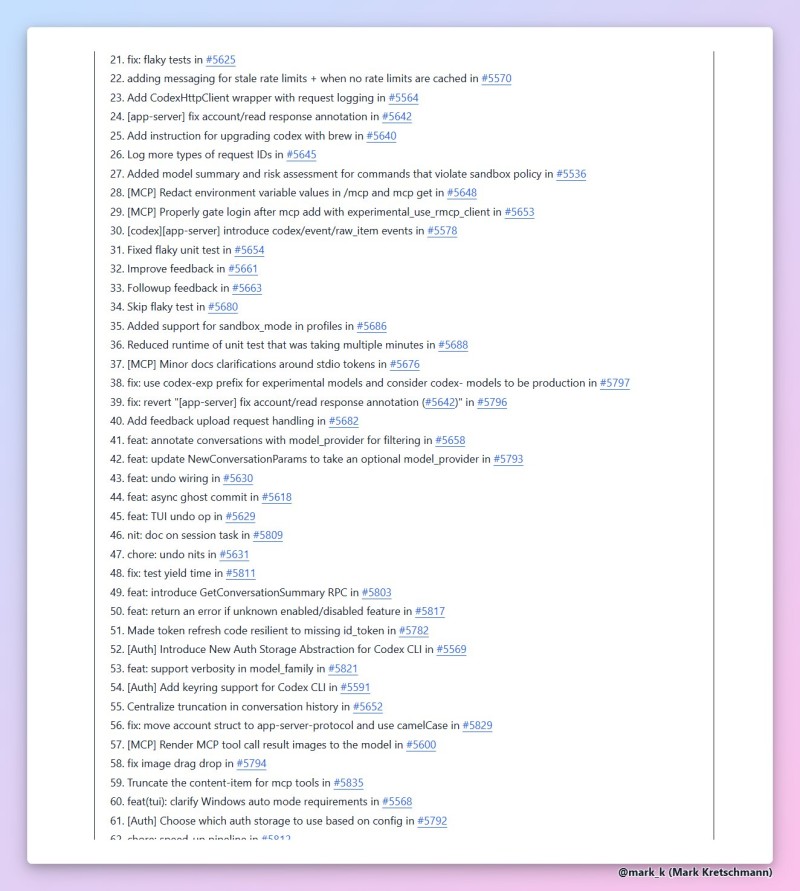
These adjustments might seem modest individually, but collectively they create a more natural back-and-forth between developer and AI—exactly what Codex-CLI aims to achieve.
Key Functional Enhancements
Version 0.52 brings several practical upgrades designed to minimize interruptions and maximize productivity. Users can now execute terminal commands inline using !<cmd>, blending natural-language queries with actual command-line operations in a single environment. Image handling has been strengthened through client-side resizing to prevent upload failures, fixed MIME verification, and restored SDK forwarding tests for improved reliability. Additionally, developers can purchase usage credits directly within the tool, eliminating the need to switch contexts during extended work sessions. These changes make Codex-CLI more self-sufficient and better suited for sustained AI-assisted coding work.
Behind the Scenes: Technical Improvements
The changelog documents over 60 merged pull requests, reflecting OpenAI's ongoing commitment to platform stability and expansion. Notable backend improvements include a new CLI authentication layer with keyring support and configurable backends, enhanced conversation management with centralized output truncation and better token refresh handling, improved event streaming and ghost commit visibility with clearer deprecation warnings, and broader Model Command Protocol updates plus risk-assessment tools for sandboxed command execution. These technical advances boost both developer control and system reliability during complex or collaborative sessions.
 Peter Smith



