
 Victoria Bazir

⬤ OpenAI recently rolled out its GPT-5 Prompting Guide, breaking down nine core principles for writing top-tier prompts. According to the release, how you word, structure, and emphasize your instructions directly impacts what you get back from GPT-5 and ChatGPT. The guide is meant as a practical toolkit for anyone using these increasingly powerful models in work or research settings where getting things right actually matters.
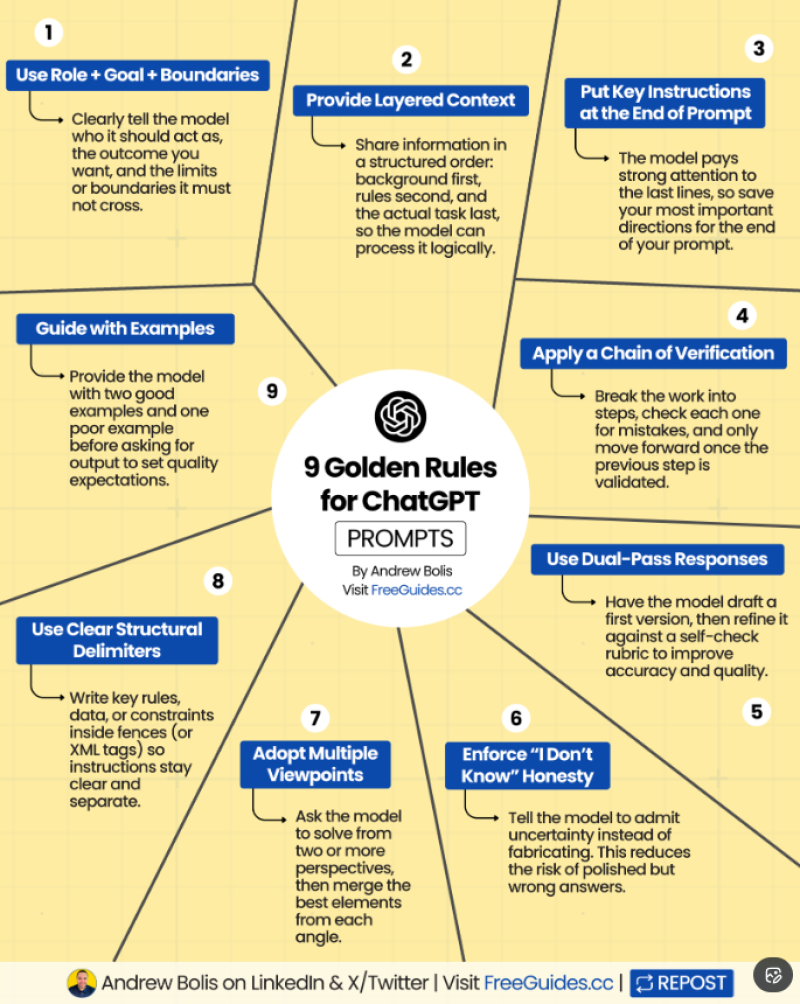
⬤ The guide walks users through starting with a clear role, goal, and limits for the AI, then layering in context step by step. It suggests putting your most important instructions at the end and breaking big tasks into smaller verified chunks. There's also a two-pass approach where the AI drafts an answer, then checks it against its own rubric, plus encouragement to admit "I don't know" rather than making things up. Meanwhile, NVDA keeps popping up in market chatter as AI-driven demand continues shaping how investors view advanced computing stocks.
⬤ Other recommendations include tackling problems from multiple angles, using clear separators like code fences to organize instructions, and showing the AI both good and bad examples so it knows what you're looking for. These rules reflect OpenAI's effort to create a more standardized way of interacting with GPT-5, making results easier to predict and control. The release has caught attention among AI users tracking big tech names like NVDA, AAPL, and TSLA as part of the wider AI story.
⬤ The GPT-5 guide highlights how prompt engineering is becoming its own skill alongside AI development. As more people lean on AI for data work, content creation, and daily tasks, OpenAI's structured framework could reshape how GPT-5 gets used across different fields, raising the bar for quality and transparency in AI-powered tools.
 Victoria Bazir



