
 Peter Smith

⬤ Google has released research that finally supplies numbers for a question AI developers have long debated - at what point does adding more AI agents to a problem begin to hurt performance? The paper shows in detail how coordination overhead and the way errors spread limit multi agent systems as they grow. Teams no longer need to rely on intuition about agent design - they now have measurable rules that predict success or failure.
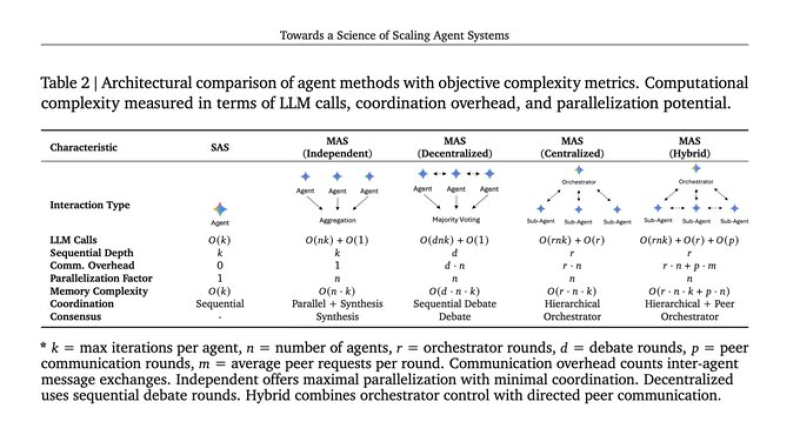
⬤ The study compares five ways to organise agents - a single agent - multiple agents that work alone - agents that debate each other - agents that report to one central controller; and hybrids that mix those styles. For each style the authors record exact figures - how many calls to a large language model are needed, how many processing steps occur in sequence, the cost of messages, memory use plus the degree to which tasks run at the same time. The numbers show a clear tension between keeping agents in step and letting them work side by side without conflict.
⬤ The critical finding is that coordination cost does not rise in a straight line - it jumps sharply as agents are added, above all in designs that use debate or a central controller. Agents that work alone finish fast and in parallel - yet they risk returning answers that clash. A central controller keeps every agent consistent - yet message traffic but also forced sequential steps slow the system. When agents depend heavily on one another, a single mistake does not stay local - it ripples through the whole group.

⬤ The issue reaches beyond theory. Firms are investing heavily in agent based AI for intricate workflows - knowing the point at which scaling fails has an immediate effect on hardware budgets and on whether the system stays reliable. Google's framework shows that smarter AI is not achieved simply - adding agents - it is achieved - choosing a coordination method that fits the shape of the task without wasting resources. This point becomes decisive as such systems leave the laboratory as well as enter everyday use across industries.
 Peter Smith



