
 Saad Ullah

⬤ Goldman Sachs is sounding the alarm about a weird disconnect in today's markets. Stocks and corporate bonds are trading at what the bank calls historically "rich" levels, but the underlying economy doesn't look nearly as overheated as you'd expect. Unemployment is stable, companies aren't drowning in debt, and inflation isn't spiraling—all signs that we're not racing toward a typical late-cycle crash. Still, Goldman thinks this tension between expensive assets and a relatively healthy economy could spark more volatility ahead, especially as questions grow about whether AI investments will actually pay off.
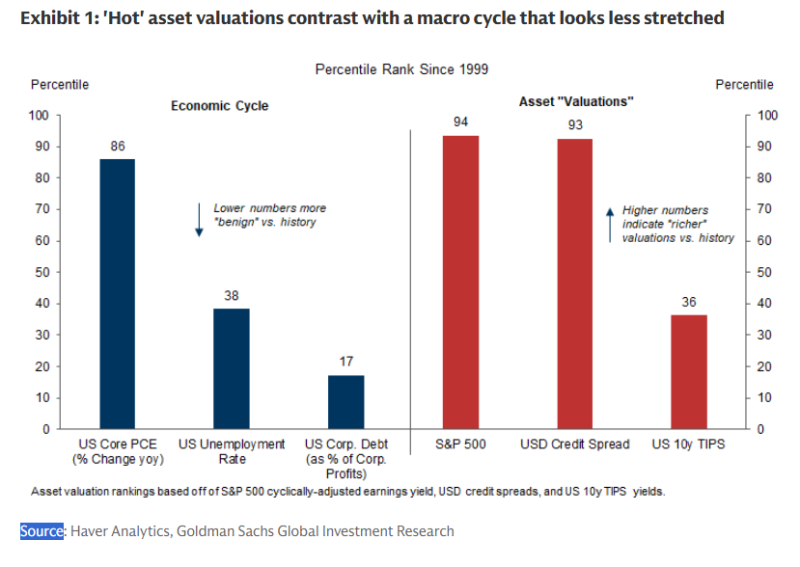
⬤ The real risk? Those pricey valuations could crumble fast if hidden problems emerge—think surprise fiscal issues or policy shocks that push bond yields higher and delay rate cuts. Even scarier: if the economy runs too hot, the Fed might have to hike rates again instead of cutting them. Goldman's charts show valuations sitting near the top of their historical range, which means there's not much cushion if things go sideways.
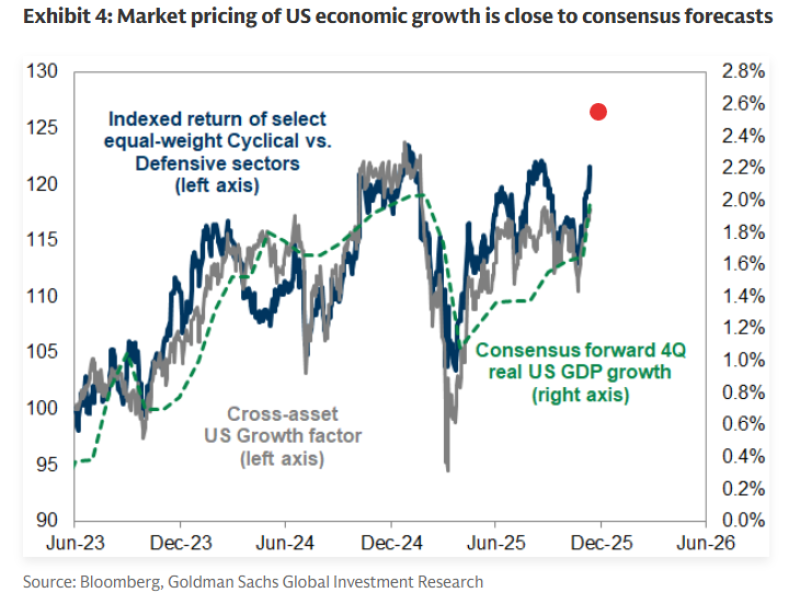
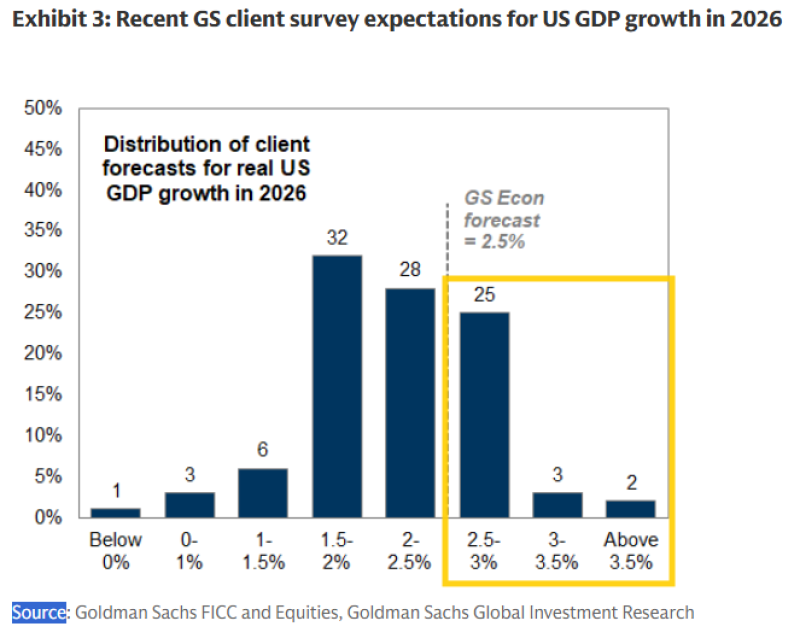
⬤ Here's the twist: Goldman also thinks markets are underestimating how strong US growth will actually be next year. The way different stock sectors are performing suggests investors are only expecting slightly above-average growth. Goldman's own clients are more optimistic—most predict growth above 2%—but even they aren't betting on anything much higher than the bank's 2.5% forecast.
⬤ So what does this all mean? We're stuck in a strange spot where prices are high, growth looks solid, but risks are lurking everywhere. Good economic data could justify today's valuations, but with credit spreads tight and investors already positioned aggressively, there's very little room for mistakes. How this balancing act plays out will probably determine whether markets keep climbing or hit a rough patch in the months ahead.
 Saad Ullah



