
 Saad Ullah

⬤ China is pulling ahead in the global AI race through an unexpected advantage: its people actually want it. Recent survey data cited by the Financial Times reveals Chinese respondents express unusually high enthusiasm for artificial intelligence while showing far less concern than their global counterparts.
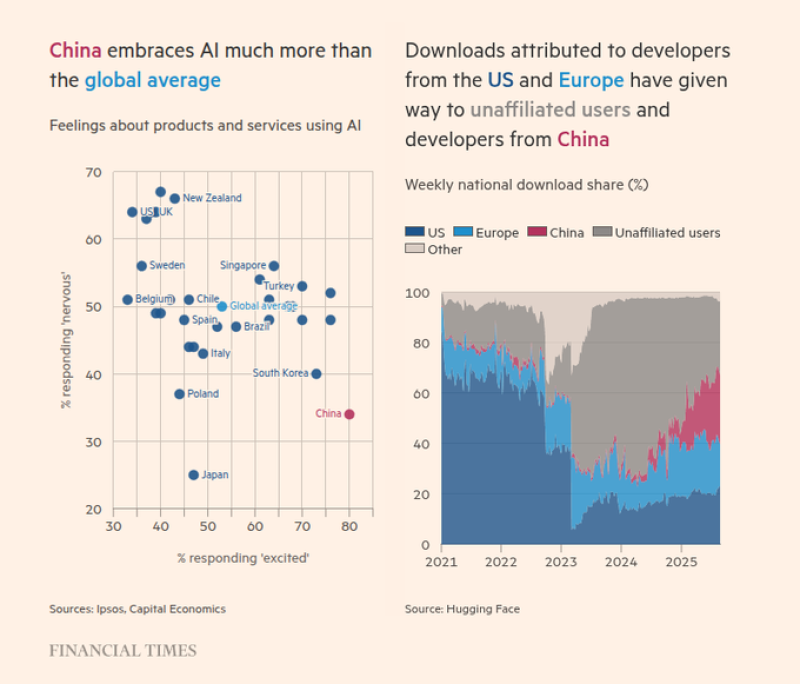
⬤ The numbers tell a striking story. China sits well above the global average in AI excitement, while the US, UK, and several European nations hover near the middle, mixing interest with significant nervousness. Japan and parts of Europe show even lower enthusiasm paired with elevated caution. This sentiment gap matters because social acceptance determines how quickly AI moves from labs into everyday life.
⬤ But sentiment is only half the story. Developer activity patterns are shifting in ways that mirror public attitudes. Data from Hugging Face shows weekly downloads attributed to US and European developers have declined since 2021. Meanwhile, China-based contributors have steadily increased their share. A growing portion of activity now comes from unaffiliated users, suggesting the AI development community is becoming more decentralized and globally distributed.
⬤ These trends are mutually reinforcing. Strong public acceptance shortens deployment timelines for new AI tools and services. Rising developer participation strengthens innovation capacity and deepens the ecosystem. Together, they create momentum that's difficult to replicate through technical capability alone.

The implications extend beyond market share. Where AI gets built and where it gets welcomed shape what kinds of applications emerge, how they're designed, and whose needs they prioritize. As these patterns continue, they're likely to influence which countries lead in AI integration across industries and how competitive dynamics in global technology evolve over the coming years.
 Saad Ullah



