
 Peter Smith
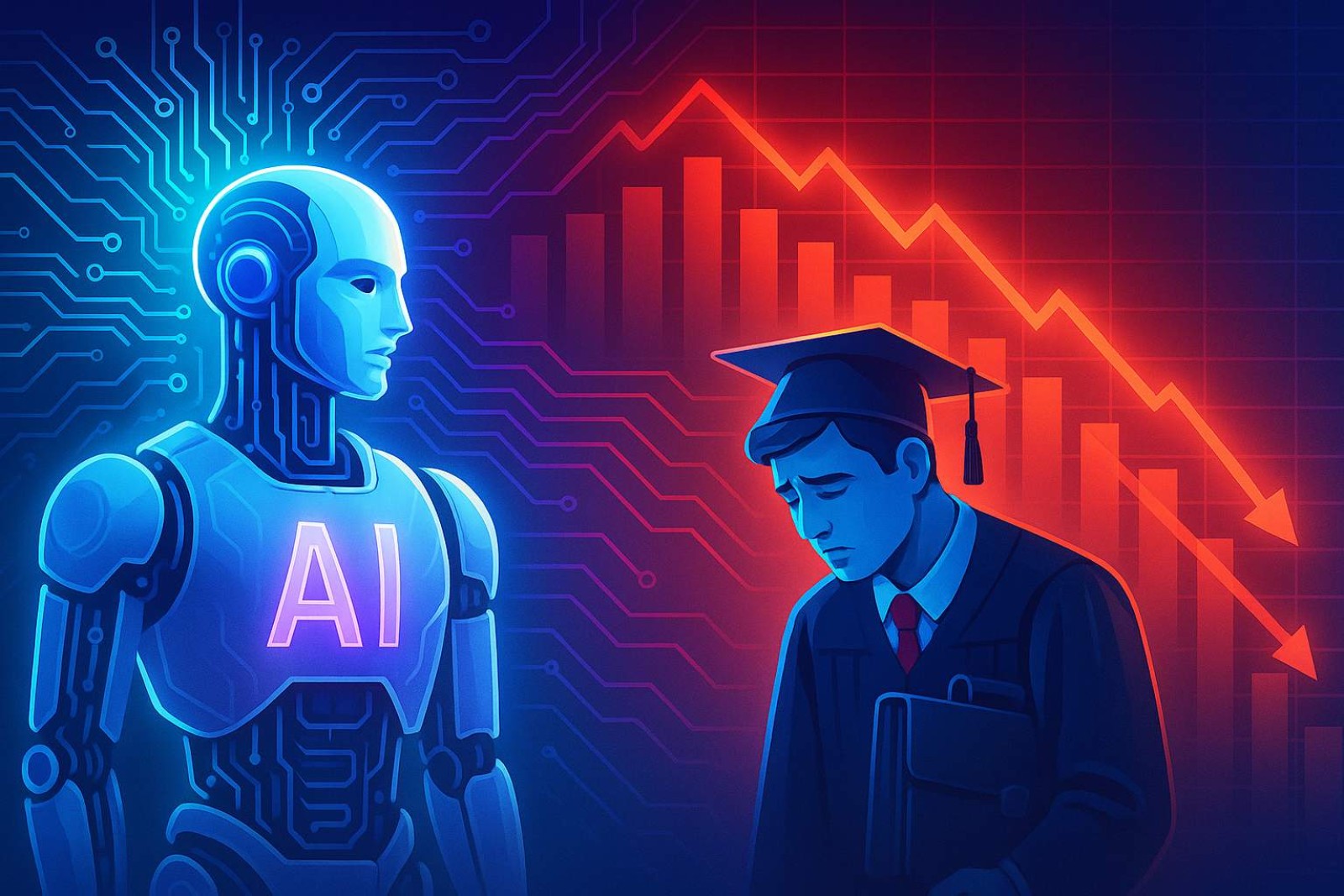
⬤ Labor market concerns are intensifying as AI reshapes employment opportunities for younger workers. Recent data from August 2025 (using Q2 2025 figures) shows that college graduates aged 22–27 consistently face higher unemployment rates than both all college graduates and the overall workforce—especially during economic slowdowns.

⬤ Historical trends from the early 1990s through 2025 reveal repeated unemployment spikes during downturns, including the early 2000s recession, the 2008 financial crisis, and the dramatic 2020 pandemic surge. Most concerning is the recent uptick in graduate unemployment even as overall joblessness remains relatively low, suggesting younger workers are disproportionately vulnerable when hiring slows.
⬤ A Goldman Sachs analysis estimates that up to 300 million full-time jobs globally face AI automation exposure, particularly in administrative, legal, and basic technology roles—traditionally key entry points for new graduates. Entry-level job postings in the U.S. have dropped roughly 35% since early 2023, with automation playing a significant role. Nearly half of young job seekers now believe AI has diminished the value of their degrees, reflecting deep uncertainty about early-career prospects.
⬤ The deeper concern extends beyond current job losses to whether future graduates will access the foundational roles needed to gain experience and advance professionally. Data confirms that recent graduate unemployment remains structurally higher than for established workers. As companies prioritize efficiency and AI systems absorb routine tasks, entry-level labor demand appears increasingly squeezed. This creates serious implications for economic growth, workforce development, and long-term social stability as AI productivity gains continue outpacing employment pathway adjustments.
 Peter Smith



