
 Usman Salis
⬤ Data center builders are racing to deploy aeroderivative gas turbines and diesel generators as AI power demand explodes and grid interconnections create bottlenecks stretching up to seven years. These aircraft-engine-based units let operators bring power online in months instead of waiting for substations and transmission upgrades. The shift is pushing AI computing toward behind-the-meter fossil-fuel generation—faster to deploy but typically dirtier and pricier than drawing from the grid.
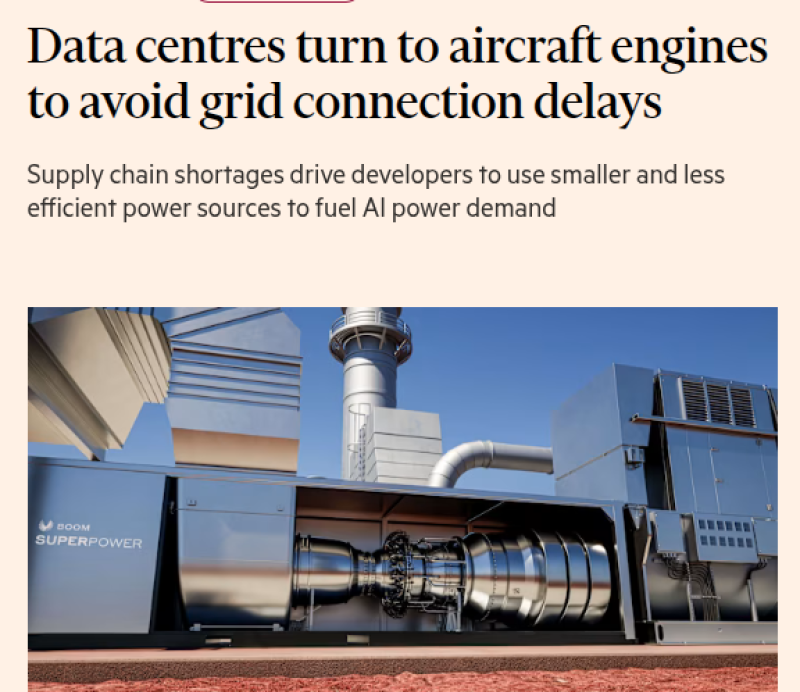
⬤ Aeroderivative turbines repurpose jet-engine compressor and turbine components, adapting them to burn natural gas from pipelines while generating electricity. Developers can roll out 30MW to 100MW modular blocks, stack multiple units for larger capacity, build in backup redundancy, and run them as microgrids that quickly adjust to changing AI workloads. Diesel generators are also moving from backup duty to primary power. The reason is simple: AI data centers can't afford to wait years for grid access while compute demand keeps climbing.
⬤ The downside is lower efficiency and heavier emissions per kilowatt-hour. Small simple-cycle turbines and diesel gensets burn more fuel than large combined-cycle plants or renewable-heavy grid mixes, driving up operating costs while adding permitting hurdles, fuel-supply risks, noise, and maintenance demands. Equipment makers are already seeing the surge. GE Vernova reported aeroderivative turbine orders jumped roughly 33% in the first three quarters of 2025, and the company is supplying turbines expected to generate nearly 1GW for the Stargate site in Texas powering OpenAI, Oracle, and SoftBank. BNP Paribas analysis pegged behind-the-meter gas generation costs at around $175 per megawatt-hour—about double typical industrial power rates—underscoring that this is a speed-first, not cost-first, play.
⬤ The trend spotlights the widening gap between AI infrastructure's breakneck expansion and the grid's slower build-out. While onsite fossil-fuel generation can bridge the gap and keep data-center projects moving, its long-term sustainability hinges on fuel prices, environmental regulations, and eventual grid access as developers juggle speed, cost, and climate commitments.
 Usman Salis



